Biological Laboratory Observation
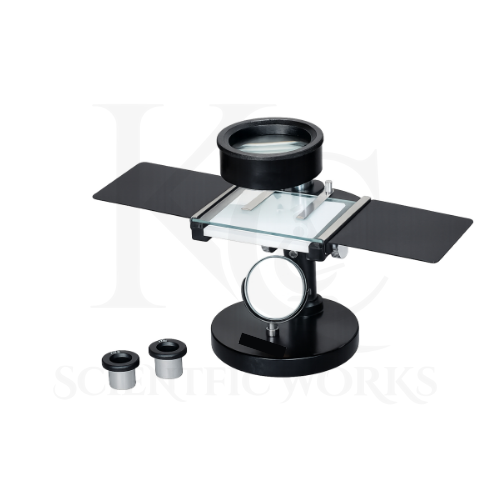
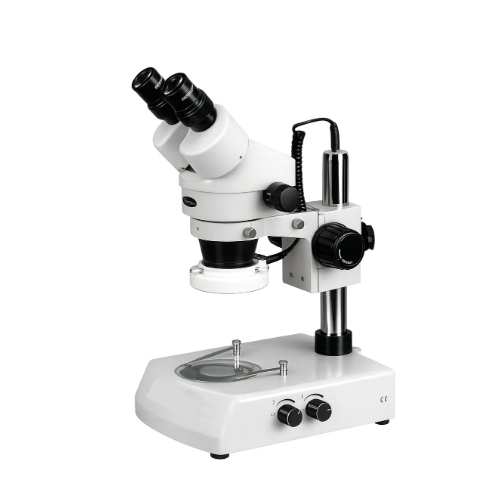
The KCX-153 Advance Dissecting Microscope is designed for observing biological specimens and small structures at low magnification. It can be used to examine insects, plant parts, biological tissues and other suitable laboratory samples.
Educational Institutions and Classroom Teaching
In schools, colleges and universities, the microscope supports practical biology lessons and scientific demonstrations. Students can use it to examine specimen surfaces, plant structures and small organisms while learning basic microscopy techniques.
Botanical Studies
The KCX-153 can be used for examining plant leaves, stems, seeds, flowers and other botanical specimens. Its low-magnification viewing system is useful for studying visible structural details and comparing different plant samples.
Entomology and Insect Observation
The microscope is suitable for observing insects and small arthropods. It can help students and researchers examine wings, legs, antennae and other external structures during educational and research activities.
Agricultural Research and Education
Agricultural laboratories and training institutions can use the microscope for examining seeds, plant materials and suitable agricultural specimens. It supports routine visual observation and educational investigations.
Scientific Research Laboratories
Research laboratories can use the KCX-153 for low-power observation of small specimens and surface structures. Its wide working stage and binocular viewing system provide a practical arrangement for routine specimen examination.
Laboratory Training and Demonstrations
The microscope can be used for teaching specimen handling, focusing techniques, low-power observation and basic laboratory procedures. Its simple focusing mechanism and mirror-based illumination make it suitable for educational training.
Specimen Preparation and Examination
The KCX-153 can assist users with positioning, examining and handling small specimens during laboratory preparation activities. Its large working stage and detachable hand rests provide convenient support for specimen manipulation.
Working Principle
The Advance Dissecting Microscope KCX-153 operates on the principle of optical magnification using glass lenses and a binocular viewing system.
A specimen is placed on the microscope's working stage and positioned beneath the optical viewing system. The mirror-based illumination arrangement directs available natural or external light toward the specimen to provide suitable visibility.
Light from the specimen enters the microscope's optical system, where the lenses form an enlarged image. The binocular viewing system allows the user to observe the specimen through both eyepieces.
The interchangeable wide-field eyepieces provide magnification options within the microscope's specified 10X–20X range.
The rack and pinion coarse focusing mechanism adjusts the viewing position to bring the specimen into focus. Users can then reposition the sample on the working stage to examine different areas.
This arrangement makes the KCX-153 suitable for low-magnification biological observation, botanical studies, educational demonstrations and routine laboratory specimen examination.
Microscope Compatibility and Usage
The KCX-153 Binocular Dissecting Microscope is suitable for examining small specimens that can be positioned on its working stage and observed within its supported magnification range.
It can be used in educational institutions, biological laboratories, botanical research centers, agricultural laboratories and scientific training facilities.
For effective observation, users should position the specimen correctly, adjust the mirror toward a suitable light source and use the rack and pinion focusing mechanism to obtain a clear image.
The detachable hand rests can be used when additional support is required during specimen handling.