Biological Specimen Observation
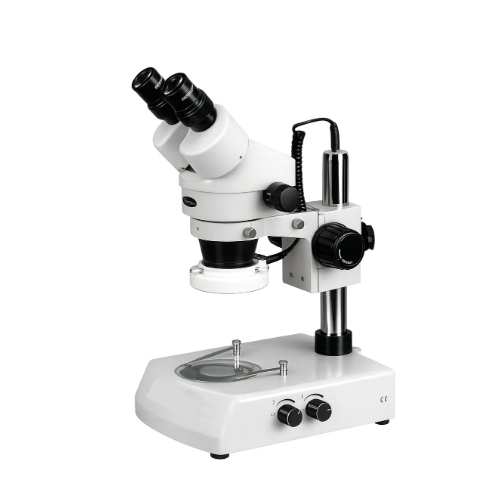
The KCX-189 Binocular Stereo Zoom Microscope is suitable for observing biological specimens that require stereoscopic examination.
It can be used for examining insects, seeds, plant structures and other suitable three-dimensional biological samples.
School and College Laboratories
Schools and colleges can use the microscope for biology practical sessions, specimen demonstrations and introductory stereo microscopy training.
University Research Laboratories
University laboratories can use the KCX-189 for routine specimen examination, scientific demonstrations and suitable low-magnification research activities.
Botany Laboratories
The microscope supports observation of plant structures, seeds, leaves and other suitable botanical specimens.
Zoology Laboratories
Zoology departments can use the microscope for examining insects, small organisms and prepared zoological specimens.
Industrial Quality Control
Industrial laboratories can use the KCX-189 for routine visual inspection of small manufactured components and surface features.
Electronics Component Inspection
The microscope can support examination of printed circuit boards, connectors, electronic assemblies and other suitable components.
Its 20X and 40X magnification settings provide options for general and detailed visual inspection.
Jewelry and Gemstone Examination
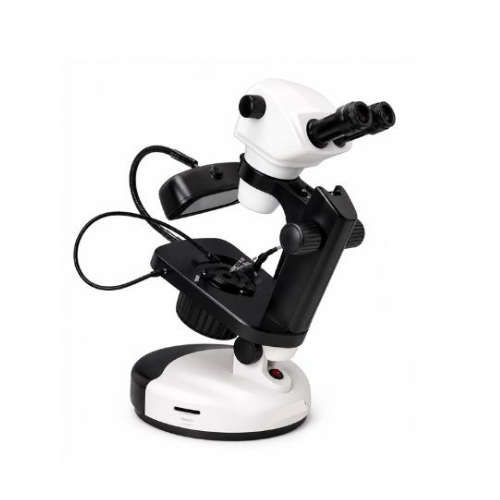
The stereo microscope can be used for examining suitable jewelry surfaces, decorative components and gemstone features.
Scientific Training Centers
Laboratory training centers can use the KCX-189 to demonstrate stereoscopic imaging, objective selection, specimen focusing and illumination adjustment.
Material Surface Examination
The microscope can be used to observe surface textures and visible features of suitable materials.
Laboratory Specimen Preparation
The stereoscopic viewing arrangement and 60 mm working distance support observation and positioning of suitable small specimens during preparation tasks.
Educational Demonstrations
The KCX-189 is suitable for demonstrating three-dimensional optical observation and the differences between 20X and 40X magnification.
Working Principle
The Binocular Stereo Zoom Microscope KCX-189 operates using the Greenough stereoscopic optical principle.
The microscope incorporates two separate optical paths that view the specimen from slightly different angles.
Each optical path produces a distinct image. When the observer looks through both eyepieces, these images are combined by the visual system to produce an impression of depth and three-dimensional structure.
The specimen is positioned beneath the microscope objective system and illuminated using the available LED lighting arrangement.
The revolving objective turret allows users to select between 2X and 4X objectives.
When combined with the WF10X eyepieces, these objectives provide total optical magnifications of 20X and 40X.
The coaxial coarse and fine focusing controls allow users to adjust the image until the specimen appears sharp.
The 60 mm working distance provides clearance for suitable specimen positioning and handling.
Optical Magnification Combinations
| Objective Lens | Eyepiece | Total Magnification |
|---|
| 2X / 0.05 | WF10X | 20X |
| 4X / 0.10 | WF10X | 40X |
Note: The microscope uses a revolving objective turret with two magnification settings. The supplied specifications do not establish a continuous zoom mechanism.
Microscope Compatibility and Usage
The KCX-189 Binocular Stereo Zoom Microscope is designed for observation of suitable biological specimens, small industrial components and laboratory objects.
It can be used in educational institutions, scientific laboratories, electronics inspection facilities and technical training centers.
For general specimen examination, users can select the 2X objective to obtain 20X total magnification.
For more detailed observation, the 4X objective provides 40X total magnification.
The LED intensity controller allows users to adjust lighting according to specimen characteristics.
The coarse and fine focusing controls should be used to obtain a clear stereoscopic image.