Biological Specimen Observation
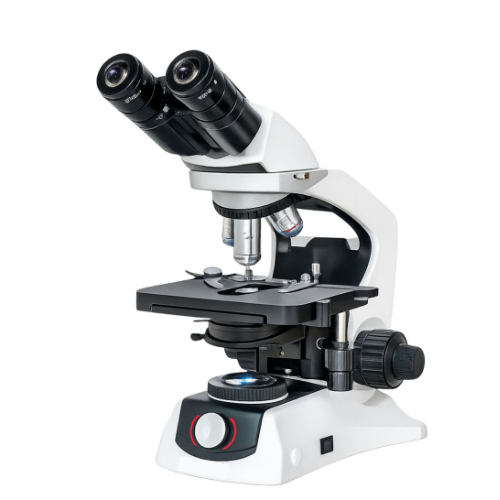
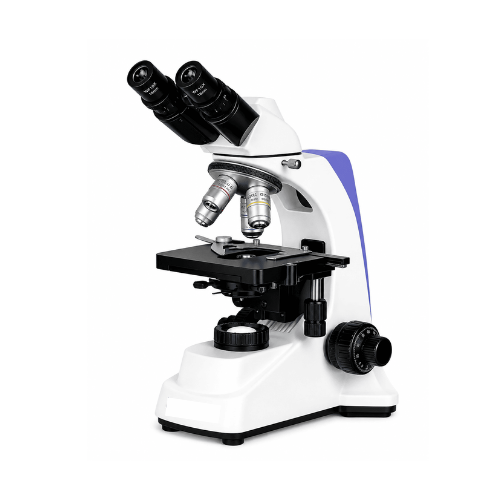
The Co Axial Advance Binocular Microscope KCX-114 is designed for examining prepared biological specimens that cannot be observed in sufficient detail with the naked eye.
Its optical magnification system supports examination of suitable cells, tissues and other microscopic structures.
School Biology Laboratories
Schools can use the KCX-114 for biology practical sessions, specimen demonstrations and introductory microscopy education.
Students can learn microscope operation, objective selection, focusing and slide positioning.
College and University Laboratories
Colleges and universities can use the microscope for routine biological practical work and scientific laboratory training.
Its 40X–1000X magnification range supports a variety of educational observation requirements.
Microbiology Education
The microscope can support examination of appropriately prepared and stained microbial specimens.
The 100X oil immersion objective is useful for high-magnification observation within the resolution capabilities of conventional light microscopy.
Botany Laboratories
Botany departments can use the KCX-114 for examining prepared plant tissue sections, cells and other botanical specimens.
Zoology Laboratories
The microscope can be used for observing suitable zoological tissue sections and prepared biological slides.
Scientific Research Laboratories
Research laboratories can use the KCX-114 for routine transmitted-light specimen examination and laboratory observation.
Medical and Laboratory Training
The microscope can support educational examination of prepared biological slides and training in basic laboratory microscopy techniques.
Clinical diagnostic use would require appropriate product validation and applicable regulatory compliance.
Biological Cell Observation
The microscope is suitable for observing appropriately prepared cell specimens and selected cellular structures using conventional bright-field microscopy.
Educational Demonstrations
Teachers and laboratory instructors can use the microscope to demonstrate optical magnification, objective selection, specimen focusing and biological observation.
Laboratory Specimen Examination
The double-layer mechanical stage and coaxial focusing system support examination of different regions of prepared microscope slides.
Scientific Training Centers
Training institutions can use the KCX-114 to teach routine compound microscope operation and basic laboratory observation techniques.
Working Principle
The Co Axial Advance Binocular Microscope KCX-114 operates using the principles of compound optical magnification and transmitted-light microscopy.
A prepared specimen is placed on the double-layer mechanical stage and positioned within the microscope's optical path.
Light from the LED illumination system passes through the specimen and enters the selected semi-plan achromatic objective lens.
The objective forms a magnified intermediate image that is viewed through the WF10X eyepieces.
The binocular viewing head directs the optical image toward both eyepieces, allowing the user to observe the specimen comfortably.
The quadruple revolving nosepiece allows selection of different objective lenses for low, medium and high magnification.
The coaxial coarse and fine focusing controls adjust the relative position of the specimen and objective to obtain a sharp image.
The mechanical stage enables controlled movement of the microscope slide so that different specimen regions can be examined.
For high-magnification observation with the 100X oil immersion objective, suitable immersion oil is used according to the microscope's operating instructions.
Optical Magnification Combinations
| Objective Lens | Eyepiece | Total Magnification |
|---|
| 4X Semi-Plan Achromatic | WF10X | 40X |
| 10X Semi-Plan Achromatic | WF10X | 100X |
| 40X Semi-Plan Achromatic | WF10X | 400X |
| 100X Semi-Plan Achromatic Oil | WF10X | 1000X |
Microscope Compatibility and Usage
The KCX-114 Co Axial Advance Binocular Microscope is designed for observing compatible prepared biological slides and laboratory specimens.
It can be used in schools, colleges, universities, research laboratories and scientific training institutions.
For routine observation, users should begin with a low-power objective, position the specimen using the mechanical stage and adjust the coarse focusing control.
Once the specimen is located, the fine focusing control can be used to improve image sharpness.
Higher magnification objectives may then be selected according to the observation requirement.
The 100X oil immersion objective should be used with appropriate immersion oil and cleaned according to the manufacturer's operating instructions.
The microscope is intended for suitable transmitted-light biological microscopy applications.