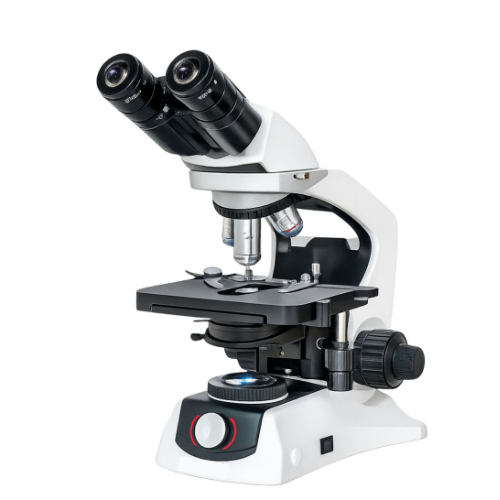
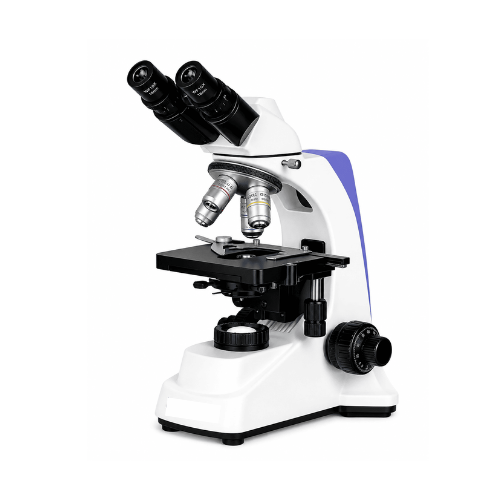
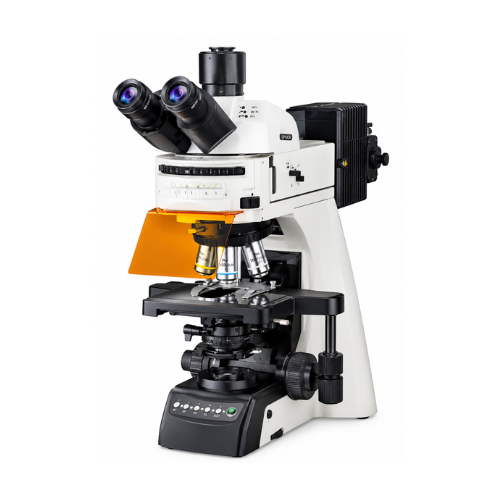
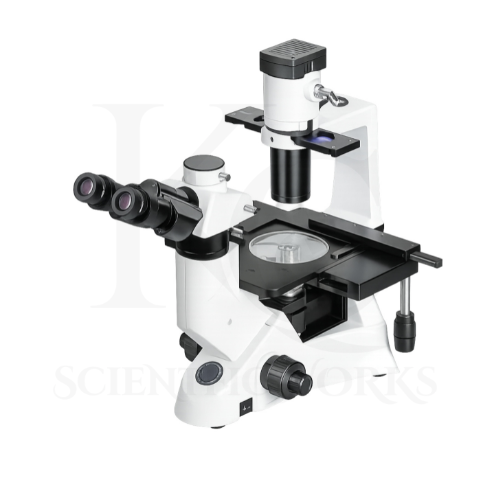
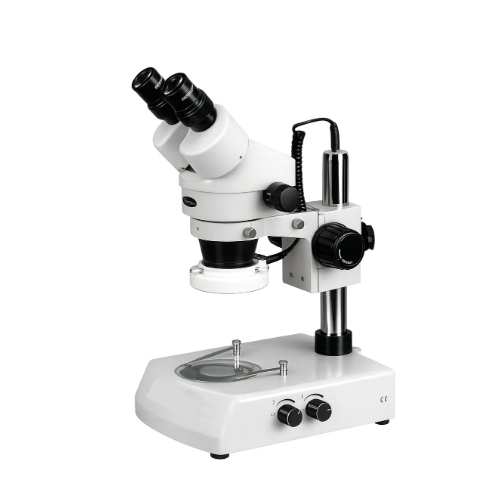
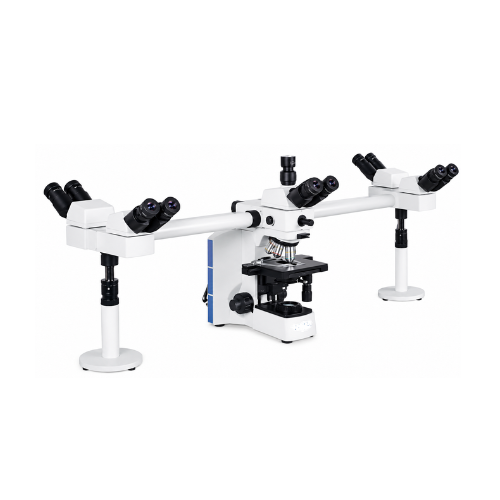
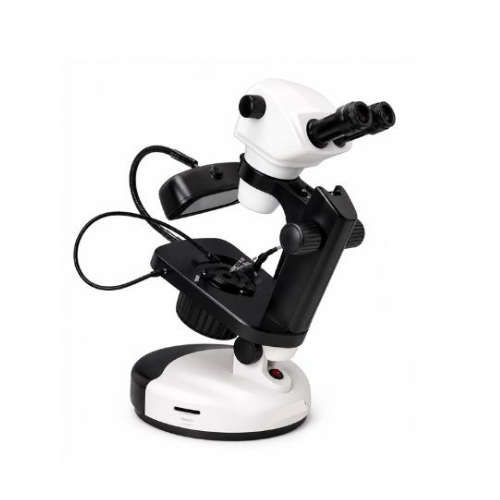
The ENT Trainer Microscope KCX-212 is designed to support magnified observation and practical skill development in otolaryngology training.
The microscope allows students and medical trainees to examine suitable anatomical models representing ear, nose and throat structures.
Its stereoscopic viewing system provides depth perception, helping users understand the spatial arrangement of anatomical features during simulation exercises.
The extended working distance provides space for handling suitable training instruments beneath the microscope.
Adjustable magnification allows trainees to move between general observation and closer examination of fine details.
The microscope's focusing system supports controlled adjustment of image clarity during practical training.
With compatible imaging accessories, instructors can display and record simulated procedures for educational review.
The KCX-212 is therefore intended for structured surgical simulation, anatomical observation and microsurgical skills training rather than direct patient treatment unless a separate clinical-use configuration has been appropriately validated and approved.
Applications
1. ENT Surgical Simulation Laboratories
The KCX-212 ENT Trainer Microscope is suitable for ENT simulation laboratories requiring magnified visualization of training models and specimens.
2. Otolaryngology Residency Training
The microscope can support structured practical training for ENT residents under appropriate supervision.
3. Temporal Bone Training
The microscope can be used for visual observation during suitable temporal bone model exercises and approved laboratory training activities.
4. Ear Anatomy Education
Medical students can use the microscope to examine educational models of external, middle and inner ear structures.
5. Tympanic Membrane Model Examination
The KCX-212 supports magnified observation of training models representing the tympanic membrane and associated anatomical features.
6. Nasal Anatomy Training
The microscope can be used to examine suitable nasal cavity models during anatomy teaching and simulation sessions.
7. Laryngeal Anatomy Education
Medical training institutions can use the microscope for observation of compatible laryngeal and vocal cord models.
8. Microsurgical Instrument Handling
The microscope supports supervised practice of controlled instrument positioning and fine motor coordination using appropriate training materials.
9. Depth Perception Training
Its stereoscopic optical system helps trainees practice estimating distances and spatial relationships within a magnified field.
10. Medical College Skill Laboratories
Medical colleges can incorporate the KCX-212 into ENT skill development laboratories and structured training workstations.
11. Teaching Hospital Training Centers
Teaching hospitals can use the microscope for simulation-based demonstrations and supervised training activities.
12. ENT Workshops
The microscope can support educational workshops focused on magnified observation and simulation techniques.
13. Surgical Anatomy Demonstrations
Instructors can use the microscope to demonstrate fine anatomical structures on suitable training models.
14. Digital Training Documentation
With compatible imaging accessories, the microscope can support recording and review of selected simulation exercises.
15. Group Medical Education
The microscope can be used with compatible digital display systems to demonstrate training procedures to groups of students.
16. Scientific and Medical Research Training
The KCX-212 can support appropriate educational research activities involving optical observation and simulation-based training.
Working Principle
The ENT Trainer Microscope KCX-212 operates using the principles of optical magnification, stereoscopic vision and controlled illumination.
A suitable anatomical model or training specimen is positioned beneath the microscope's observation head.
Light from the fiber-optic or LED illumination system illuminates the selected training area.
The high working distance objective collects reflected light from the observed structures.
The microscope's optical system produces magnified images that are directed toward the binocular viewing arrangement.
The stereoscopic system presents slightly different perspectives to the observer's left and right eyes, allowing the trainee to perceive depth.
The operator can select the required magnification using the zoom or turret-based magnification mechanism.
The coaxial coarse and fine focusing controls are used to obtain a sharp image.
The boom stand or floor stand supports positioning of the microscope over the training area.
When a compatible camera system is installed, the optical image can also be directed toward digital imaging equipment for display or recording.
Magnification System
| Parameter | Specification |
|---|
| Magnification Type | Zoom / Turret-Based |
| Typical Magnification Range | 5X–40X |
| Viewing Method | Stereoscopic Binocular |
| Observation Head | Binocular / Optional Trinocular |
| Objective Type | High Working Distance Achromatic |
| Working Distance | Approximately 200–300 mm |
| Exact Magnification Steps | Configuration-Dependent |
Microscope Compatibility and Usage
The KCX-212 ENT Trainer Microscope is intended for use with compatible anatomical models, educational specimens and ENT simulation equipment.
It can be installed in medical colleges, ENT departments, teaching hospitals and simulation laboratories.
For training, the microscope should be positioned securely over the selected model or training workstation.
The operator should adjust the working distance, viewing angle and illumination according to the exercise.
A lower magnification setting can be used for initial orientation, followed by higher magnification for examining fine structures.
The stereoscopic viewing system supports practice of depth assessment and controlled instrument positioning.
Compatible digital imaging accessories may be used for instructional demonstrations and recording.
The microscope should be operated according to its final supplied technical configuration, mounting instructions and applicable laboratory safety requirements.