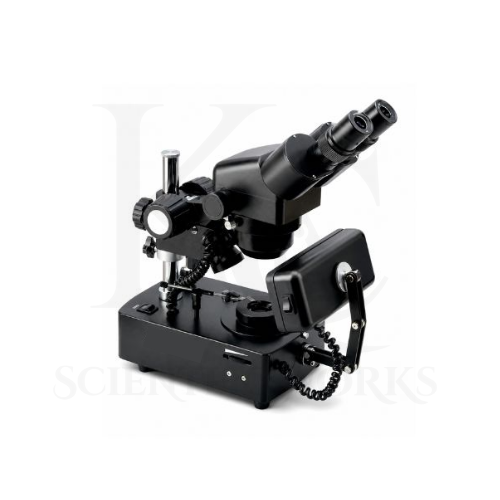
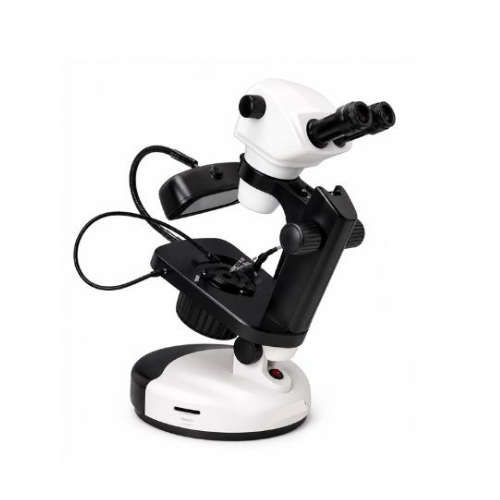
The Gemological Microscope KCX-197 operates using the principles of stereoscopic optical magnification and darkfield illumination.
A gemstone or compatible specimen is secured using the supplied gem clip and positioned beneath the observation head.
The microscope's 12V, 10W halogen lamp provides illumination for the darkfield system.
In darkfield observation, light is directed toward the specimen in a manner that reduces direct background illumination entering the objective.
Selected internal features, inclusions and irregularities scatter light toward the microscope's optical system.
The stereo zoom optics collect the light and produce magnified images.
The binocular viewing system presents slightly different perspectives to the observer's left and right eyes, creating a stereoscopic viewing effect.
The operator adjusts the zoom magnification within the 20X–80X range according to the specimen and inspection requirements.
The adjustable iris diaphragm allows control of the illumination field.
The rotating head provides flexibility in viewing orientation.
Darkfield Gemstone Observation Process
Specimen Placement: The gemstone is secured using the supplied gem clip.
Illumination: The halogen lamp provides light to the darkfield system.
Darkfield Lighting: The illumination arrangement directs light toward the gemstone while reducing direct background light.
Optical Magnification: The stereo zoom system magnifies the observed specimen.
Magnification Adjustment: The user selects an appropriate setting between 20X and 80X.
Viewing Orientation: The binocular head can be rotated to suit the observation position.
Visual Examination: Visible inclusions, surface features and other specimen characteristics are examined.
Magnification System
| Parameter | Specification |
|---|
| Microscope Type | Binocular Stereo Zoom |
| Specified Magnification Range | 20X–80X |
| Eyepieces | 20X |
| Observation Head | Binocular |
| Viewing Method | Stereoscopic |
| Illumination | True Darkfield |
| Zoom Ratio | 4:1, Based on the Stated Magnification Range |
| Head Rotation | 360° |
Magnification Selection
| Magnification | Typical Observation Purpose |
|---|
| 20X | General gemstone examination |
| 30X | Closer observation of visible gemstone features |
| 40X | Detailed surface and inclusion inspection |
| 60X | Higher-magnification examination of fine details |
| 80X | Maximum specified magnification for close visual inspection |
These are illustrative magnification settings within the specified zoom range, not necessarily fixed zoom positions.
Darkfield Illumination System
| Parameter | Specification |
|---|
| Illumination Method | True Darkfield |
| Lamp Type | Halogen |
| Lamp Rating | 12V, 10W |
| Illumination Adjustment | Adjustable Iris Diaphragm |
| Main Observation Purpose | Gemstone and Inclusion Examination |
| Suitable Specimens | Compatible Transparent and Translucent Gemstones |
| Light Control | Adjustable |
| Electrical Compatibility | 120V / 240V Adaptable |
Gemstone and Jewellery Inspection
Diamond Cut Observation
The microscope can support visual examination of facet edges, symmetry-related features and selected surface details.
Gemstone Colour Examination
The microscope can assist in observing gemstone colour appearance under the supplied lighting conditions.
Formal colour grading requires standardized lighting and assessment procedures.
Inclusion Examination
True darkfield illumination can improve the visibility of selected internal inclusions within compatible transparent gemstones.
Surface Feature Inspection
The microscope supports observation of visible scratches, polishing marks, chips and other surface characteristics.
Jewellery Stone Examination
The KCX-197 can be used to examine suitable jewellery stones and small components.
Microscope Compatibility and Usage
The KCX-197 Gemological Microscope is intended for professional inspection of compatible gemstones, diamonds, jewellery stones and small specimens.
It can be used in gemological laboratories, jewellery workshops, gemstone inspection centers and educational institutions.
For routine observation, the specimen should be positioned securely using the supplied gem clip.
The darkfield illumination system should be selected and adjusted according to the gemstone and inspection requirements.
The operator can adjust magnification within the specified 20X–80X range.
The iris diaphragm can be used to regulate the illumination field.
The binocular head can be rotated to provide a convenient viewing orientation.
The microscope should be operated according to the final supplied electrical specifications and manufacturer instructions.